Author: TJ

  • Do The Fit Really Get Fitter?

    I’m fairly certain everyone is familiar with the old saying, “the rich get richer…” — especially since it has resurfaced to throw sour grapes at modern billionaires — but what about the fit get fitter?

    The Case for Professional Athletes

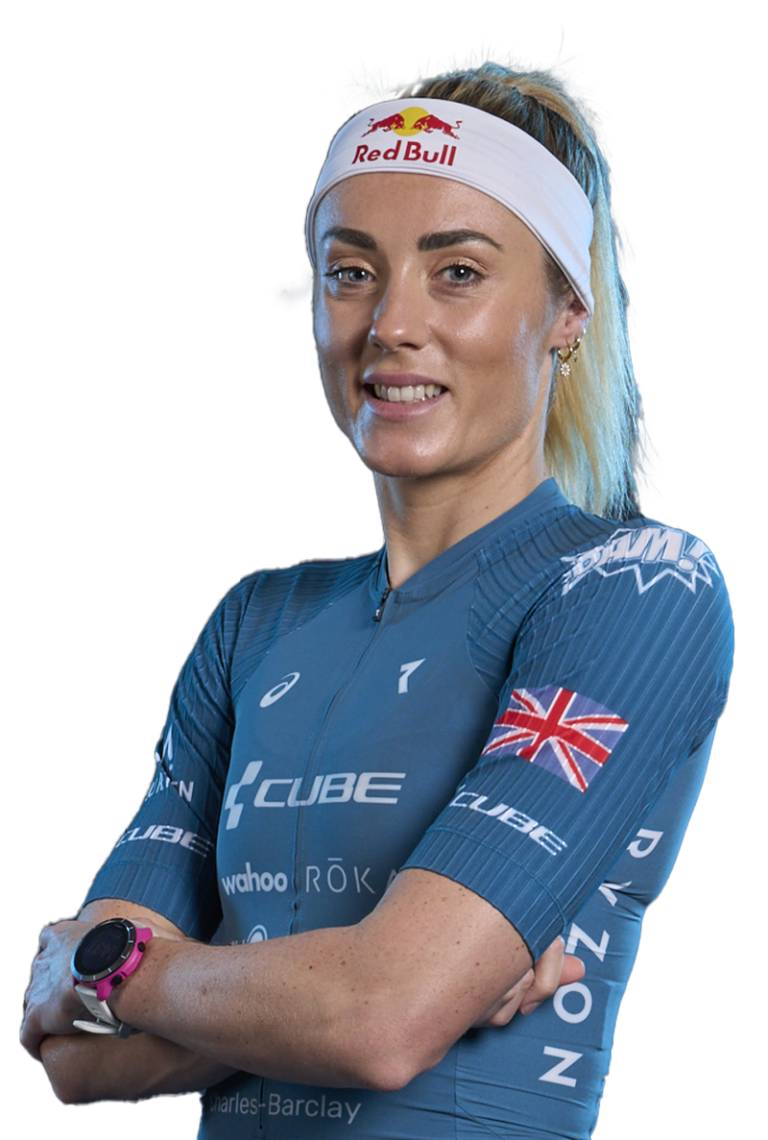
    This idea was initially inspired by the professional triathletes I have been following through the T100 series this year. Two athletes in particular are RedBull sponsored athletes — Lucy Charles-Barclay and Hayden Wilde. Wilde gained widespread popularity recently as he was in a major accident and came back earlier than expected to win the T100 London race, shortly followed by a back-to-back race at T100 French Riviera. Charles-Barclay won the female division of T100 London, coming back from last-year’s DNF due to injury.

    Lucy Charles-Barclay. Courtesy of T100 Triathlon

    If you follow their activities through their regular videos on YouTube, you will see immaculate home-gym set ups and top-of-the-line equipment for both training and competitions. I can’t help but wonder how much money goes into all that gear. Luckily for them, they are sponsored by one of the most prolific athletic sponsors in the world. Not a factor of luck, though, is the hours of work they have put into becoming the best in the sport so as to earn such a prestigious sponsorship.

    So that begs the question… Do the fit get fitter?

    Hayden Wilde. Courtesy of Yahoo Sports UK

    All athletes train hard — especially the professionals — and in a sport like middle- to long-distance triathlon, the results are largely dependent on the fitness of the athlete. However, triathlon is dependent on the gear that you have. Turn on any triathlon podcast and you will hear a ton of talk about the best bike set-ups, fastest tires, most aerodynamic position, etc. Not to mention the discussion on fastest running shoes or most hydrodynamic wetsuit. My point is, the highest-performing athletes gain the most attention and therefore partner with the best brands to gain advantages in kit upgrades and training center access. Not to mention the paychecks that allow them to leave their day jobs and pursue training full time. Might this improve their fitness faster than the average athlete?

    When I think of this question, I think of a graph with an exponential curve of growth. In the beginning (near 0 on the x-axis), the growth is small and virtually unrecognizable until finally it reaches a turning point and the growth takes off. In athletics, one could liken that turning point to a breakthrough in their career such as a career-defining win, or the moment they decided to pursue their sport professionally. On a mathematical graph, the growth could continue to infinitum, but is that also the case for athletes?

    Of course, there are always new athletes entering the conversation. Charles-Barclay herself was a stand-out newcomer when she first made the transition from competitive swimmer to triathlete. But how many standouts are true beginners, having never competed in another sport before?

    It seems fairly intuitive that physical fitness can translate between sports and that sport-specific technique is what needs to be honed for any athlete to do well. With this in mind, the top athletes would need to have large amounts of innate talent to be as good as they are. One can always hire a coach to help them develop better and faster than they might on their own, but as evidenced by the most recent Ironman World Championships, uncoached athletes can also train themselves to top-place finishes.

    So what does this say about fitness? Is there a pinnacle level of fitness that everyone is capable of reaching that no amount of fancy training gear can help them surpass? Or does access to top-of-the-line equipment give athletes an edge, making the fit… fitter?

    The Case for the Average Person

    While it’s great to ponder this question for people at the peak of their biological fitness levels, how does it apply to the everyday human? The majority of people on the planet are not athletes training every day to make podiums or break records, they are merely completing their daily responsibilities or striving to maintain healthy levels of activity and nutrition. Does the concept of “the fit get fitter” apply to them?

    Looking at it from a bioenergetics perspective, people with less muscle mass and higher body fat percentages are at a disadvantage. Reading any study or textbook related to exercise science will make it apparent that muscle burns more calories than fat. In other words, the more muscle mass a person has, the more likely it is for them to have a higher basal metabolic rate.

    The basal metabolic rate is defined as the number of calories a body will burn over a 24 hour period if laying down but not sleeping. A higher basal metabolic rate is preferred as it means more calories can be utilized for functional purposes, rather than merely excreted or stored as fat.

    In the past two to three decades, diet culture was massively influential. It drove many people — women especially — to under eat in the hope of losing weight. Initially, cutting calories worked for people, they would slim down to their goal weight, then bounce back to their initial weight or worse within a few months of ending their diet. I’m sure many people will either have experienced this for themselves or know someone who fell victim to the yo-yo of dieting.

    Educated trainers would know that restricting calorie intake can actually do more harm than good. Unfortunately, financial gain was louder than healthful practices.

    Now, at least, there seems to be an uptick in people engaging in strength training. This is a massive step in the right direction as resistance training is a highly effective way to lose weight and keep it off in a healthy way.

    To most people, this may seem counter-intuitive. If you are thinking about body weight, most people will know that muscle weighs more than fat; if you gain muscle, your total body weight will increase. What they might not understand though, is the biochemistry happening inside the body.

    Fat serves as energy storage in the human body. It’s purpose is to help the body function properly during times of low calorie intake, preventing your body from shutting down immediately if no food is consumed. Most studies say humans can survive up to three days without food — this is largely due to the energy reserves stored in fat.

    Muscle, on the other hand, can be built or lost with action or inaction, respectively. Use it or lose it, in other words. Muscle requires a lot of energy to maintain as it requires the body to breakdown and utilize proteins. If there is no need for the body to maintain a muscle due to lack of use, it sends its efforts elsewhere to provide attention to other areas of the body that are being used.

    Think of people who broke their leg or ankle and had to wear a cast for several weeks. By the time they have the cast removed, the leg that was injured is visibly smaller than their other leg. The muscles were not utilized, so the body diverted energy away from maintaining those muscles.

    If a person starts to use certain parts of their body more (i.e. lifting weights), the body will adapt and divert energy to the required limbs to help accomplish those tasks. Muscle will start to build, but it can only do so if the proper macronutrients are available.

    The body will start to adapt by utilizing the fuel given to it to develop those muscles. As more strength is gained, muscle mass increases, and more calories are burned. Even maintenance of the muscles requires the body to expend energy, thus utilizing fat and carbohydrate stores to achieve required energy needs.

    All of this culminates in healthier, stronger people with lower body fat percentages. Exercising and healthy eating becomes essential to maintain or improve fitness levels. People can get into the rhythm of daily exercise, they see strength and size improvements, they feel better. It becomes addicting after a while as those endorphins (the feel good hormones) are released in the brain during exercise. The fit continue to exercise, only serving to increase their fitness…

    Conclusion

    As with anything, it is what you make it. It is not innate for a trend to continue just because it has started, one must still fuel it. The RedBull sponsored athletes still have to train hard to perform well, non-athletes still have to eat well and exercise to maintain their fitness, wealthy people have to continue to make money to stay wealthy… the list goes on.

    So, do the fit get fitter?

    While it is tough to answer for sure, one thing is for certain: it is easier to stay fit when you are already fit.

    Let’s keep the discussion going in the comments. What do you think about fitness? Is it a level to be achieved or can a person keep getting fitter?

    Thank you for reading!

  • Using Self-Reflection Effectively

    Self-reflection is deeply ingrained in discussions surrounding emotional intelligence and widely touted as the way to self-improvement, but could it actually be hurting you?

    According to Harvard Business Review, self-reflection is the act of looking back on your day to evaluate your thoughts and actions without regret. The key point here, though, is those two words at the end of the sentence, “without regret”. Effective self-reflection means contemplating your behaviors without beating yourself up for it. Easy in theory, difficult in practice.

    The Analogy

    In my mind, self-reflection is akin to completing a graded assignment. That score received for that assignment will either signify a job well done and boost that student’s confidence, or be poor and instill feelings of disappointment, shame, and inadequacy.

    The method of rote feedback in schools evolved as a way for teachers to assess larger groups of students, at a time when class sizes were increasing. It provided a means of standardization through a universal scoring system, effectively moving away from detailed, growth-based feedback.

    The grading system is widely popular in modern education, but it is not without its critics. In 1918, economist Thorsten Velben was quoted as saying the “system of academic grading and credit… progressively sterilizes all personal initiative and ambition that comes within its sweep.” In other words, students are taught to stifle their creativity or refrain from indulgent exploration around a topic in order to achieve a worthy score.

    The Downfall

    I see self-reflection working in the same way. Daily self-reflection can lead to heavy self-critiquing and adaptation of behaviors to prevent future embarrassing situations or interactions. The trouble comes when so many adjustments are made that eventually the person loses sight of who they truly are.

    Or, because that personally is constantly analyzing themselves, they discover patterns in their thoughts, behaviors, and actions that reflect poorly. Just like a stream of bad grades can wear down a student’s academic confidence, noticing recurring patterns of undesirable behavioral tendencies can wear down a person’s self-esteem.

    If self-reflection leads to too much course-correcting or creates unhappiness from the observed behaviors, a detrimental downward spiral may be imminent.

    The Strategy

    Self-reflection is a great way to help yourself improve, but those who engage in it should also be aware of how negative thinking can hijack it. Here are three strategies to help protect yourself from hurtful self-reflections:

    1. Don’t grade yourself so harshly. It is all to easy to quickly assign poor “scores” to behaviors you look upon less favorably. If this happens, try to remove yourself from it and approach the situation from another perspective. Imagine someone you love exhibited those behaviors. How would you “grade” that behavior. Most of the time, you will find you are grading yourself harsher than is necessary.
    2. Be gentle in the way you address your behaviors. Negative talk, like gossip, is so easy to participate in. Train yourself to be kind to yourself and leave room for grace if you don’t get it right away.
    3. Double the positive reflections. If you do find negativity creeping up in your self-reflections, make an effort to list twice as many positive reflections. This means that for every scenario you reflect upon poorly, list two positives that came out of it.

    As a bonus tip, decide how detrimental some trait or behavior is to the grand scheme of your life. If you see it becoming a problem in the long run, find ways to improve that area without beating yourself up for it. Approach it as a skill you already know but need to tune up a bit. If it doesn’t affect your overall quality of life, perhaps it’s not worth dwelling on.

    The Final Message

    Self-reflection is a great way to empower yourself, improve yourself, and help yourself to achieve your potential — if done correctly. Be as tough as you need to be to help yourself reach your goals, but don’t forget to take care of the fragile self behind it all.

    Thanks for reading!

    Sources

    Bailey, J. R., & Rehman, S. (2022, March 4). Don’t Underestimate the Power of Self-Reflection. Harvard Business Review; Harvard Business Review. https://hbr.org/2022/03/dont-underestimate-the-power-of-self-reflection

    ‌McNutt, C. (2022, August 8). A Brief History of Grades and Gradeless Learning | Human Restoration Project | Chris McNutt. http://Www.humanrestorationproject.org. https://www.humanrestorationproject.org/writing/a-brief-history-of-grades-and-gradeless-learning

    More from LambCHNOPS

    Do The Fit Really Get Fitter?

    I’m fairly certain everyone is familiar with the old saying, “the rich get richer…” — especially since it has resurfaced to throw sour grapes at modern billionaires — but what about the fit get fitter? The Case for Professional Athletes This idea was initially inspired by the professional triathletes I have been following through the…

    Using Self-Reflection Effectively

    Self-reflection is deeply ingrained in discussions surrounding emotional intelligence and widely touted as the way to self-improvement, but could it actually be hurting you? According to Harvard Business Review, self-reflection is the act of looking back on your day to evaluate your thoughts and actions without regret. The key point here, though, is those two…

    Adding “Seasoning” to Your Life

    As someone from the upper region of the northern hemisphere, I was no stranger to all four seasons. I switched sports depending on what time of year it was; ice skating in the winter, basketball in the spring, softball in the summer, cross country in the fall. I watched farmers sow crops in spring and…

    One response to “Using Self-Reflection Effectively”

    1. Jess’s Unfiltered Avatar

      What’s the point if we didn’t right you have to dig really deep

      Liked by 1 person

    Leave a comment

  • Adding “Seasoning” to Your Life

    As someone from the upper region of the northern hemisphere, I was no stranger to all four seasons. I switched sports depending on what time of year it was; ice skating in the winter, basketball in the spring, softball in the summer, cross country in the fall. I watched farmers sow crops in spring and harvest in the fall. I knew what it meant when the geese formed triangles in the sky. The seasons were alive and well all around me, but I rarely paid attention to them. Like every child, I was asked which season was my favorite, just as surely as every child is asked what they want to be when they grow up. Sure, I had a favorite season and another that I was less fond of, but I never really thought about why that was.

    After finishing high school, I moved south in search of an endless summer. Year-round average temperatures of 80 F/27 C was an absolute dream in my eyes. Over time, though, the sheen wore off and I started to feel more and more exhausted with each passing day, but I couldn’t understand why.

    I then relocated to a city with all four seasons. Though the city was large and very busy, I felt a strong urge to slow down and rest. First, the changing colors of Autumn invited me to get cozy, then the biting cold of Winter yelled at me to bundle up and settle in. As insistent as those seasons were, I regret to say that I did not listen.

    The modern world trudges along at an unyielding pace, the march to which I conform. Slow down? Never. Push through? Absolutely.

    After what seemed like forever, Spring finally came skipping down the street. In a sing-song voice, Spring told me that it was time to shed the layer, get rejuvenated. But by then, I was too fatigued to be excited about Summer’s arrival.

    Autumn. Photographed by TJ

    I learned that in bustling cities, people do not slow down when the weather begins to cool. The chills of autumn winds and the snowy gusts of winter are mere conversations to modern folk. The sight of flowers beginning to peek out of their bulbs and the return of the sun are just pleasant tidings, but neither changes the daily grind. Without acknowledging the messaging the seasons are trying to give, living in these types of climates can be just as exhausting as a perpetual summer.

    Burnout, exhaustion, and a lack of motivation may be a sign that we have fallen out of sync with our surroundings. Maybe listening to the signals of the seasons could be a way to regain balance in our lives? Maybe taking heed of the seasons would allow time for rest, time to plan, time to grow, and time to flourish?

    A city street with people walking in the snow.
    Winter. Photographed by TJ

    Thinking about seasons in this way reminds me of Vivaldi’s Four Seasons. In each concerti, the personality of the respective season is expressed through patterns in the notes. Naturally, Winter sounds more melancholy than Summer, but that does not mean it is not without its own climactic moment. Moments of excitement and moments of calm are what make the songs dynamic, and these elements are present in the naturally occurring seasons as well.

    cherry blossoms
    Spring. Photographed by TJ

    Now, when I am asked what my favorite season is, I have my answer ready and know exactly the reason why.

    Thanks for reading.

    TJ

  • Is there a scientific case for aliens?

    When I was little, my family used to go to a restaurant called Space Aliens. It was a bit like Chuck E. Cheese but instead of a mouse, it was alien themed — the little green kind. The dining area was decked out with all the typical sci-fi space gadgets (UFOs, spaceship control panels, galaxy murals, etc.), the play area had space-themed games, and the prizes were gizmos of the alien variety — stickers, statues, and other miscellaneous trinkets. As a young kid, it was fun to see what size alien statue I could win by playing the arcade games, but as I got older, I started to ponder whether aliens were actually real or not.

    In 2020, right before the world shut down, my friends and I took a spring break trip to New Mexico, USA — the destination of note: Area 51. Turns out tourists can’t actually access Area 51, but we did enjoy the town closest to it, particularly the small business offering sets of alien statues to take pictures with. Again, those alien statues were the stereotypical alien depictions that I’m sure comes to mind for most people.

    Modern movies have branched out at least. Star Wars, Star Trek, and Guardians of the Galaxy are a few of the relatively recent movies that come to mind. Most of the aliens in these movies look nothing alike; in fact, they look different depending on which planet they originate from. This concept of different planets hosting different types of life forms could actually be the more realistic scenario.

    Exobiologists, or astrobiologists as they are more commonly referred to now, are scientists who use modern science to search for life elsewhere in the universe. The problem they run into, though, is that nobody really understands what life is yet. Sure, we know life exists on Earth. To us, living systems are the plants, animals, bacteria, and people we encounter on a daily basis. Biological organisms are life, but why? We see the macro version of life. Take humans, for example. We eat, we breathe, we sleep, blood pumps through our veins, we grow, we die. We are alive. Now think about grass. Grass grows, it takes in nutrients, it participates in photosynthesis (analogous to respiration in animals), and it dies. Neither example looks like the other, yet we know that both are alive. How then, can we determine what life is, if all examples look different?

    One option is to zoom in to look at the processes happening inside the organisms. At the micro-scale (10-6), we start to see cells which have also been deemed to be alive. These cells take in nutrients, participate in (cellular) respiration, carry out functions, then die. Zoom in even further and we find information about the organism encoded in DNA that is constantly being replicated, transcribed, and edited. That DNA is made up of amino acids which are structures made up of many atoms chemically bound together. At what point do we stop saying something is alive? Then, even if we can determine what life is, how can we find it on other planets?

    Stay tuned for next week’s article where we will explore the question “what is life?” through recent publications in peer-reviewed journals.

    Be sure to subscribe to the newsletter so you don’t miss out on any new posts, and consider leaving a comment if there is anything you would like to see explored in future articles.

    Thanks for reading!

  • Fall Asleep to Modern Physics

    A new episode of Fall Asleep to Science just dropped.

    It is a 30 minute episode covering topics included in an undergraduate course on modern physics. Such topics include relativity, atomic structure, quantum mechanics, particle physics, cosmology, and nuclear physics.

    Happy listening!

  • How to Be Successful

    Recently, I watched a video by Ali Abdaal on YouTube titled, “How To Get Rich“. It was a great video because Ali didn’t just share the cookie cutter nonsense everyone else seems to spout these days. Instead, he shared the uncomfortable truth that no one wants to acknowledge. To get rich, you must get unhealthily obsessed with making money. Now, this article is not about how to make money or how to get rich, but I think Ali’s advice is very important and can be applied to any areas in life that you want to become successful in.

    When I was in middle school, I remember constantly getting bored during math class. I felt like I was wasting hours of my life repeating the same material I already knew how to do. Because I couldn’t just leave the class, I found a way to make my minutes more productive. I asked the teacher if I could work on the next day’s material. This was the catalyst for what would change my life completely. As I began to work ahead on mathematics assignments, I realized that I could finish the entire year’s worth of material much sooner than prescribed. I became obsessed with completing more and more assignments to see how far ahead I could get. Eventually, I finished all the material required for my grade level with three months left in the school year. My teacher then suggested I start working on the material for next year. Still obsessed, I jumped on the opportunity and soon found that I had completed all the requirements for ninth-grade mathematics by the time the school year was coming to a close.

    The principal of the school took notice of my accelerated plan and reviewed my records in other classes. With his approval, I was cleared to skip the requirements for all other grade-nine subjects, and come Fall, I would start taking classes with students one year ahead of me.

    I worked steadily at this level for one semester before another opportunity crossed my path. I was offered the chance to begin a dual-enrollment program the following year — if I transferred to a different high school. Still intoxicated by the idea of graduating early, starting college at the age of 15 was an incredible proposition. I accepted the offer, transferred schools, and started taking university classes a semester later.

    I graduated university having just turned 17, and with two years-worth of university credits and experience under my belt. None of it would have been possible if I wasn’t so obsessed with pushing myself further academically. I sacrificed extracurriculars, social groups, and other activities to reach my goal. Looking back, I think this is the kind of “unhealthy obsession” that Ali was talking about.

    Since watching that video, I have started looking at the paths of other successful people. I can think of many athletes that have dedicated their lives to their sport, often making large sacrifices to become the best that they can be. Talented musicians who spend hours practicing. Academics that rarely see sunlight because they are so passionate about increasing their knowledge. Mechanics who spend their free time fiddling with any machinery they can find. Artists who doodle on everything. The list is endless.

    I think Ali was on to something. Successful people are (or were at some point) unhealthily obsessed with whatever it is they became successful at.

    To be successful, you have to immerse yourself in the world of whatever it is you are trying to achieve. Consume content related to it whenever you can then apply it in strategic ways. Learn and improve constantly. Desire to achieve.

    And if you can’t become obsessed with it, how much do you really want it?

    What are your thoughts on this? Do you agree or disagree with obsession as a way to get successful? Let me know what you think in the comments section and be sure to give this article a “like” if you enjoyed it.

    Thanks for reading.

    TJ

  • Fall Asleep to General Chemistry

    A new episode of the podcast “Fall Asleep to Science” just dropped. It is 73-minute-long episode covering every that is taught in the first semester of a general chemistry course at university.

    Listen to this episode to learn about the classification of matter, important scientific laws in chemistry, properties of gases, different types of reactions, thermochemistry, electromagnetic effects in atoms, atomic structure, equilibrium reactions, and properties of solutions.

    Happy listening!

    The source material for the content of this episode can be found in the following textbook:

    Tro, N. (2021). Chemistry: A molecular approach (4th ed.). Pearson Education Limited.


  • Graduate School: A Cautionary Tale from a Two-Time Dropout

    I tried graduate school twice but dropped out after one year both times. It wasn’t that I couldn’t handle the academics (I had completed all the required coursework in my first degree and was halfway through the requirements of the second), I couldn’t handle the competitiveness of academia.

    For years, I had tied my self-worth to my academic success. I studied hard, got good grades, skipped a grade, made dean’s lists and honor rolls, and graduated early. By all accounts, I was successful. Except, graduate school is not about coursework or grades, it’s about research.

    I was always so eager to learn that I soaked up any information I was given or could find for nearly all the topics covered in high school and during my bachelor’s. I thought graduate school would be more of the same. What I didn’t realize was that graduate school prepares you to be an expert on one topic: the topic you research. In graduate school, you spend years planning experiments, writing procedures, testing hypotheses, reviewing literature, and presenting your findings for the niche topic you chose when you started. That works for a lot of people, but it does not work for me.

    I am a very self-motivated person. I work well independently and can focus on tasks for significant periods of time. I put my all into every project I do. This seems like it would be the perfect profile for a graduate school candidate, but actually, it is the perfect recipe for burnout.

    In graduate school, there are no set working hours. You decide your schedule. You still answer to your supervisor and have deadlines to meet, except those deadlines are often months to years in the future. You have to budget your time well enough to meet those deadlines. Simple in theory, difficult in practice.

    When you are in graduate school, there is a shiny star called “the future” to guide you through the massive amount of work you must complete. You are enticed by the promise of a high paycheck and notoriety if you make a significant contribution to your field. You work diligently, day and night, to perform the necessary experiments, gain credible data, and write informative prose, only to find out that a mere five people will ever read your dissertation. There are also academic journals that all researchers, students and professionals alike, are encouraged to publish in. “Publish or perish” is a common mantra I heard in graduate school. Publications get you professorships, and isn’t that the goal for academics?

    Then there is the issue of egos. Everyone in academia — professors, post-docs, and students — all think they are smart. They would not be in their position if they weren’t. The trap students fall into is in trying to prove their intelligence. No longer is it enough to think you are smart; everyone else must think you are smart too. When you are in a place where everyone around you is intelligent, there is no easy measure for assigning smarts, but students find their own ways to determine it. “I come in earlier than everyone else.” “I stay later than everyone else.” “I’m farther along in my research than everyone else.” “I’m attending these conferences.” “I have X amount of publications.” If any one of these criteria are not met, students feel like they are failing. Thus starts the cycle of putting in more hours and more effort to achieve the high standard students are only putting on themselves.

    To cap it all off, each stage in the academic ladder is expensive, thankless, and rarely pays well. To be in academia, you must love it. You have to love the mundane task of carrying out experiments that, by design, are unsuccessful more times than they succeed. You have to love having every word of everything you say or write be scrutinized. You have to love being in competition with your peers — imaginary or not. Academia is brutal and graduate school is just the tip of the iceberg.

    Most of the professors I have met, don’t seem to care about this cycle. The impression I got was, “I got through it, so must you.” They are only too happy to see the experimental results come in and the journal papers be written. It secures them publications for their H-index and a cozy position at the university.

    University professors do wear many hats and are often incredibly busy. With teaching classes, advising undergraduate students, supervising graduate students, serving on committees, peer-reviewing journals, applying for grants, and conducting their own research, professors are stretched extremely thin. It is all too easy to blame them for failing to help their graduate students emotionally, but they are also running their own hamster wheel.

    There are wonderful professors out there who put in the effort to nurture their students to be successful in academia, but they are few and far between. It also isn’t entirely the supervisor’s fault when a student leaves. I had a wonderful supervisor during my first attempt at graduate school that put in great effort towards helping my lab mate and I succeed in our research. I blame my immaturity for my withdrawal. I was swept up by the imagined competition, the need to prove myself, and the daunting prospect of spending four more years on only one topic I wasn’t sure I liked.

    My second attempt was the real eye-opener. After taking a year off from academia, I switched schools, departments, supervisors, and countries for my next attempt. I will say that many things took place in my personal life that led to my ultimate withdrawal from this university, but there is also a lot to be said about the program and research environment I was in that made me decide to leave.

    This university was much more prestigious than the first university I attended and their research was much more visible. I was excited to learn from the best of the best and hopefully become one myself. In the beginning, I took in as much advice and information as I could. I paid attention to the senior students and tried to mimic what appeared to be working for them. When I transitioned into the phase of finally conducting my own experiments and presenting my own work, things started to fall apart.

    My supervisor became more distant and was extremely harsh when he did give feedback, often in the form of public shaming. I had difficulties with trying to repair broken laboratory equipment and navigating the process of ordering materials (in a foreign language) for my research. I felt like I was falling behind, so I put in more hours at the institute, arriving extremely early in the morning to get work done while the building was quiet and empty. I agonized over the presentations and reports I prepared, only to have them ripped apart or entirely rewritten by my supervisor. No matter how much effort I put in to improve, I was just left feeling stupid, incapable, and like “a waste of time.” Compound that with the issues I was facing in my personal life, and I spiraled into a very dark place mentally. When I realized just how bad things had become and nothing was working to pull me out of the state I was in, I knew I had to leave. I felt tremendous shame for walking out in the middle of another graduate degree, but it had to be done.

    Now, months later, I am the happiest I have felt in a long time. After having initially sworn off anything related to science, I have found great enjoyment in producing my podcast, Fall Asleep to Science, and applying my prior coding and analysis experience to become a data scientist.

    I am thankful for my graduate school experiences because they helped me to understand my true passions and what I want out of my professional career. I am now aware of my natural tendencies and insecurities and am working to correct those that hinder me. I learned so many valuable skills that I will carry with me into future roles: time management, effective research strategies and experimental design, work-life balance, and networking. I am a more capable person that will continue to improve with each new experience. I fell on my face twice by quitting two graduate programs, but I am a much more self-aware person because of it.

    If you are considering graduate school, I strongly encourage you to think about your mental patterns and what motivates you. If your habits and motivations are similar to what mine were, I urge you to set up a series of checks for yourself to prevent burning out. A desire for prestige is not enough to carry a person through the highs and lows of academia. Be sure to choose a supervisor you trust and a topic you could spend years dissecting. Prepare yourself before you start by brushing up on the topics you will be expected to know for your chosen discipline.

    Academia is a great space, but it is undeniably challenging. Choose wisely and prepare accordingly.

    What were your biggest failures that led to your most fruitful growths? Did you go to graduate school? What are your mental habits?

    Feel free to share your answers in the comment section, or like this post if you enjoyed it.

    Thank you for reading.

    -TJ

  • How to Stay Consistent with Exercise

    In a previous post, I wrote about my running journey. I love running, but I haven’t always been able to do it. I have had many injuries and other commitments that left me unable to either endure the physicality of running or find the time to run. Usually, when that happens, both my mental and physical health suffers tremendously. Other times, my emotions get in the way; I talk myself out of doing an exercise because of some excuse I came up with. I’m too tired, I’m stressed about deadlines, I don’t want to lose momentum on the project I’m working on, etc. When I fall into this mindset, my workout routine becomes non-existent, or sporadic at best. After years of letting this mentality get in the way, I have finally figured out how to stay fit despite feeling every emotion in the book.

    This post has one purpose: to help you stay consistent with your exercise routine. It is not meant to be a training plan, a “lose weight fast” scheme, or a tutorial on how to build muscle. My goal is simply to help you move your body every day, despite what you may be feeling that day. Here’s how to do it:

    1. Note which activities you enjoy doing. What activities do you instinctively do? Are there other activities you want to try?
    2. Determine timeframes. How long do you spend on each activity? How much time do you have each day to spend on activities?
    3. Pay attention to your emotions. How do you feel when you do a particular activity? How did you feel before you started doing that activity? How do you feel after?
    4. Put it together. Which activity do you do when you feel happy or excited? Which activity do you do when you feel sad, or mad, or nervous? Which activity do you do when you are short on time? Which activity do you do when you want to turn your brain off for a while?
    5. Make the commitment to move every day. Adjust the activity based on your habits and emotions.

    When I first started to track myself, my answers to these steps looked like the following:

    1. I instinctively go running or do yoga at home. I want to try cycling, swimming, and boxing.
    2. Running takes me 30 minutes minimum, but I usually drive to a location to run which adds 10-15 minutes each way. Yoga takes less time, usually only 15-20 minutes. I only have 20 minutes to spend on exercise during the week. On weekends, I have more time.
    3. When I run, I feel free but also impatient to finish. I always feel accomplished and happy afterward. When I do yoga, I feel calm and relaxed. I leave every session feeling more mindful and tolerant. Before running, I am either feeling nervous or stressed about something, or I feel very energized and up for more intense activity. Before doing yoga, I am usually tired or my mind is racing and I need it to calm down.
    4. See my activity-emotion-time chart below for how I put it all together.
    5. I now know which activities to do when I am stressed or happy, which to do when I am tired, and which to do when I am angry. From that list, I pick which activity fits in the time frame I have available that day, or I may modify the length of the activity to match.

    Activity-Emotion-Time Chart

    ActivityEmotionTime
    RunningBefore: nervous, stressed
    During: free
    After: accomplished, happy
    30 min – 1 hr 30 min
    CyclingBefore: lazy
    During: content, inspired
    After: accomplished, happy
    15 min – 2 hr
    SwimmingBefore: tired, sad
    During: adventurous, playful
    After: awake, rejuvenated
    1 hr
    YogaBefore: sleepy, anxious, unmotivated
    During: calm, relaxed
    After: mindful, tolerant
    15 -20 min
    BoxingBefore: angry, motivated
    During: strong, bad-a**
    After: epic, free, capable
    20 – 40 min

    Reading through the after-effects of the activities I wrote down reinforces how beneficial exercise is to my mental state. I find that each activity gives me a boost in some area of my mood or mentality. When I spend my week trying a few activities, I feel more playful and find that I look forward to exercise. An unexpected bonus is that it prevents me from paying attention to statistics or PRs because I can’t remember the stats for five different exercises at one time!

    I now work out according to what I need that day and no longer force myself to do any particular activity because I feel I should. I do the activity now because I want to, knowing that it will help my mental state. Working out is not a punishment for me, it is a tool to help my emotions. Gentler exercises suit me best when I am unmotivated or tired, while the more intense and demanding exercises satisfy my needs when I am full of energy. Since I have been following this method, I have not missed a single day of exercise in the past two months. I feel happier, healthier, more capable, more resilient, and I am in the best shape of my life!

    What activities do you do to stay fit? Do you like my method of working out to your emotional needs? Let me know if you try it!

    Please like this post if you enjoy this type of content, and subscribe so you don’t miss any future posts.

    Thanks for reading. Happy exercising!

    -TJ

  • Fall Asleep to Physical Chemistry

    A new episode of Fall Asleep to Science just dropped. Listeners will learn about the Ideal Gas Law, Boyle’s Law, Charles’ Law, Gay-Lussac’s Law, and Avogadro’s Principle. The differences between real and ideal gases will be explained, and an explanation of the Van der Waals equation and Virial equation for real gases will be given. Further discussed is the difference between state and path variables, closed and open systems, the sign conventions used in physical chemistry, the Zeroeth Law of Thermodynamics, the First Law of Thermodynamics, the Joule-Thompson experiment, and the role of endothermic and exothermic processes in chemical bonds.

    Fall Asleep to Science aims to provide a soothing audio for listeners to fall asleep to while learning about science topics at the college-level.

    Visit the webpage “Fall Asleep to Science” to learn more.