A new episode of Fall Asleep to Science just dropped. Listeners will learn about the Ideal Gas Law, Boyle’s Law, Charles’ Law, Gay-Lussac’s Law, and Avogadro’s Principle. The differences between real and ideal gases will be explained, and an explanation of the Van der Waals equation and Virial equation for real gases will be given. Further discussed is the difference between state and path variables, closed and open systems, the sign conventions used in physical chemistry, the Zeroeth Law of Thermodynamics, the First Law of Thermodynamics, the Joule-Thompson experiment, and the role of endothermic and exothermic processes in chemical bonds.
Fall Asleep to Science aims to provide a soothing audio for listeners to fall asleep to while learning about science topics at the college-level.
An episode of Fall Asleep to Science about the history of genetics was recently published. In this episode, listeners will hear about the development of genetics as a science, discover the four major theories on inheritance that have existed since about 450 BC, and learn about the major contributors to our understanding of genetics. This episode journeys through time to learn how the human genome was first sequenced, then explores chromosomes and the cellular stages of reproduction in meiosis and mitosis.
Genetics is all about the fundamental basic principles of inheritance, including what they are and how they come about.
It is the Science of Potential, the transfer of biological information from cell to cell, parent to offspring, and generation to generation.
Genetics is concerned with why and how biological information transfers, because biological information transfer is the basis for differences and similarities recognized in groups of living organisms
Genetics explains the physical and chemical nature of biological information and asks,
● What are the sources of genetic information? And
● What are the differences?
To put the study of genetics into perspective, the pedigrees of animals and plants started 6000 years ago with initialization of breeding regimes. In fact, the oldest known genetic records are on horses…
For centuries, humans have asked questions such as:
Where did we come from?
Are we alone?
Whither are we going?
Why am I here?
If you have ever asked yourself any of those questions in any form, you may be a budding astrobiologist.
Throughout history, famous philosophers have asked themselves the big questions listed above, but there has never been an adequate way to empirically address them — until now.
Astrobiology is a growing field that is garnering more and more support. Private organizations, such as the Blue Marble Space Institute of Science and the Mars Society, host communities of scientists exploring questions related to the origins of life and the future of life in space. NASA has a division dedicated to astrobiological research, and conferences like AbGradCon are popping up to grow the field of astrobiology.
So, what is it exactly?
Astrobiology addresses questions about the origin of life, life in the universe, and the future of life in space and on Earth. It encompasses every subdivision of science and tests the imagination to think about life from different perspectives.
Whether you are a geologist, chemist, biologist, astronomer, mathematician, physicist, or philosopher, there is a need for you in the field of astrobiology.
Though previously studied separately, it is the collaboration among all these disciplines that will move astrobiology further. Institutions such as the Earth-Life Science Institute in Tokyo, Japan have recognized this need and intentionally seek interdisciplinary collaborations. From the formation of planets to the bacteria in hot springs, every detail is important.
So, if you are curious about if humans could survive on Mars or why Earth is the only planet we know of that has life, you may want to look into astrobiology.
To get started, give this episode of Fall Asleep to Science a listen, then go look into the organizations I mentioned. Let me know what you discover!
How did you hear about astrobiology? What do you want to know?
Do you know of other organizations that research astrobiology?
Share your knowledge here, or consider subscribing to help the community of astrobiology grow!
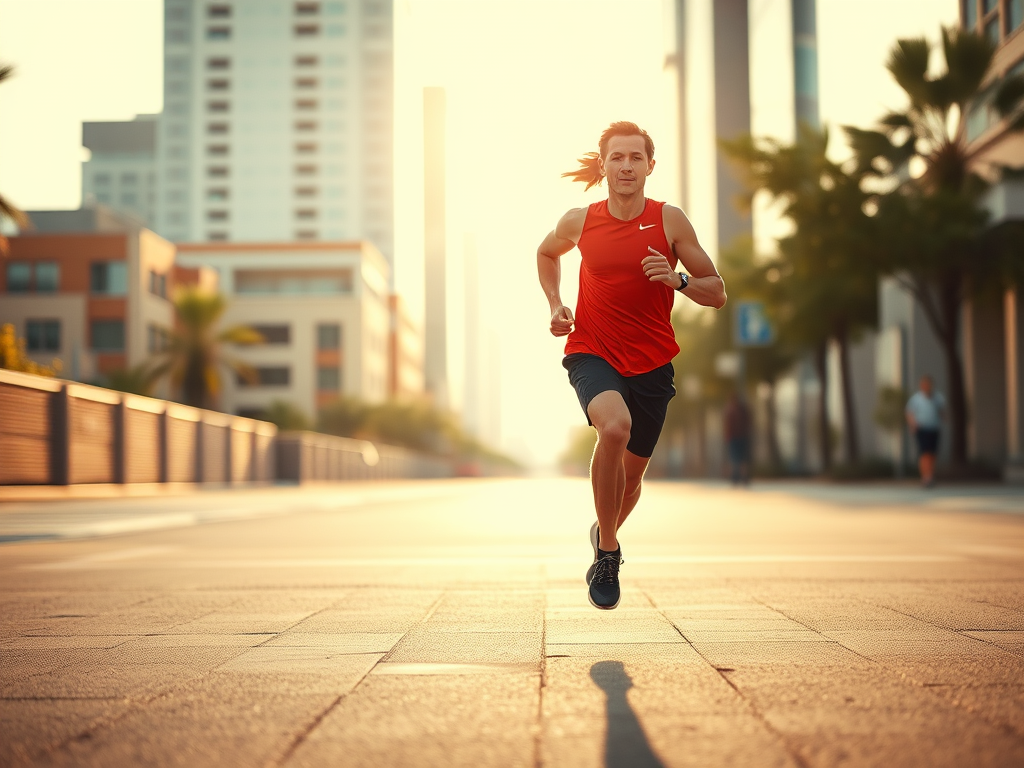
Social media is filled with inspiration urging you to get into running and it seems like everyone is training for a marathon these days. Maybe it has inspired you to train for your own marathon, or maybe, you just want to find an enjoyable way to get into shape. Whatever your motivation, this guide is here to help you lace up your trainers and get out the door.
Contents
My Experience
Tip 1: Go alone or don’t
Tip 2: Running attire
Tip 3: Finding running shoes
Tip 4: Be gentle
Tip 5: Nutrition and hydration
Tip 6: Keep yourself entertained
Tip 7: Stretch
Conclusion
My Experience
I have called myself a runner since I won the 400 m race at my elementary school’s annual track and field meet at the age of 9. At that stage, I didn’t know about carbon-based soles or fueling. All I knew was I had two legs that carried me down the track and running felt awesome. That summer, I took myself for runs whenever I felt like it. I had just figured out how to save free songs to my iPod Touch, so I would go jogging down the streets of the small town where I grew up with my iPod in my hand and the cords to my earbuds bouncing against my chest. I listened to the same two songs I had downloaded every time I ran. I listened to those songs on repeat so often that now, whenever I hear “Don’t Wake Me Up” by Chris Brown or Armin van Buuren’s “This Is What It Feels Like”, I immediately think of the sunrise I used to see midway through my runs. Running was never something I felt like I had to do, I simply just wanted to do it.
When the school year started again, I joined the cross-country club that met twice a week after school. Again, it was a small town, so the club consisted of one or two students from each grade starting at Grade 3 and up. We started by running laps around the schoolyard, then slowly progressed to a longer route that took us off school property. The big goal of this club was to compete in one race at the end of October against all the schools from our region. To train, I stuck to the twice-a-week practices established by the club.
When the end of October came, we drove to the city for the big meet. I was shocked to see kids from the bigger schools doing elaborate warm-ups and jogging in packs before the race had even started. All I did to prepare was lace up the athletic shoes my mom had bought from Walmart–which were two sizes too big because my mom didn’t want to have to buy new shoes again this schoolyear when my feet were still growing — and do a few ankle rollouts and quad pulls my teacher had shown me. Then, I noticed a few kids I recognized from neighboring schools and we chatted until it was time for our races. I came in ninth that day and was awarded a ribbon for making the top ten. It was a great experience, and needless to say, I was back the following year.
As I got older, I started to search for tips on how to improve my running. I wanted to get top five in those big cross-country meets, but nothing I was doing on my own was helping. As I got faster, so did the kids I was competing against. I subscribed to running magazines and poured over any bit of advice they gave. Looking back, not all of the advice I read was good advice, but I was determined to improve.
I moved away before I ever broke the top five at that cross-country meet. I started at a big high school in a big city and very quickly realized that I was not nearly good enough to compete with the “big city kids”. Their cross-country programs were more serious than any practice I had ever been a part of, and I backed away in fear. I kept running in my spare time, but I never competed again.
In my first year of college, I had a roommate that used to do running challenges for ROTC at her high school. We started running together after classes and chatted the entire time. To this day, I don’t think we would have become as good of friends if we hadn’t run together so much.
My second year of college, I was in a car accident that messed up my neck and back. After the initial shock of the accident, I tried to take myself for a run to relieve some of the stress but quickly found out that I couldn’t. The pain was so bad that I threw up not even three minutes into the run. Queue chiropractor appointments and physical therapy.
When I was cleared to run again, I discovered I was not as in shape as I used to be. Running still hurt and I got winded very quickly. I got discouraged and stopped running almost entirely.
A few years later, I was tired of feeling lazy and wanted to get back into sport. Somehow, I stumbled across triathlons. I was inspired to see people nearly thirty, forty years older than me completing these triathlons and reckoned it would be a good, relatively low-impact way of getting back into sport. I roped my partner into joining me and together, we began the Couchto5K program to get back into running shape. We signed up for a sprint triathlon just outside the city and committed to a triathlon training plan we found on YouTube. It felt good to train for an event again and I had never felt more accomplished than when I crossed the finish line of my first ever triathlon.
Last year, I moved abroad and fell out of the habit of exercising again. When life got stressful, I realized I needed an outlet. I tried to take myself for runs but, to my immediate dismay, I discovered I had lost my fitness again! With nobody to run with and my joints feeling stiff, running felt like a chore. I then looked for another way to fill my exercising needs and stumbled upon a rugby club in the city. I had played rugby in high school but had all but written it off after my university did not have a club. I knew it would be a great way to meet people outside of my regular routine, so I started going to practices. Eventually, the competition season started and I was asked to join in on a tournament. I was eager to play again, so I said “yes”. Then, in my second tournament, I heard a pop as I was being tackled and discovered I could barely put weight on my left leg. I had completely ruptured my ACL.
One surgery, ten days in a Japanese hospital, and months of physical therapy later, my ACL was deemed stable enough to start running again. When I tried to run, I could barely manage thirty seconds of jogging. It was heartbreaking. I realized just how much I had taken running for granted in the past. Right then, I vowed to strengthen my knee as much as possible so I could get back to the activities I love.
Now, it is 2025, I am nearly nine months post-op on my knee, and I recently ran a half-marathon.
How did I do it?
#1 Go alone or don’t
First, having a friend run with you helps a lot! Find someone who is willing to run slowly with you as you just start out. Having somebody jog next to you can provide a small push to keep you running when you are tempted to stop. They can also provide good conversation that will take your mind off the exercise. Bonus if you can find someone who is on the same level of running fitness as you. You can encourage each other to keep going!
That is not to say you cannot get into running if you don’t have a friend to go with you. When I first started running, all the way back in third grade, I didn’t have a buddy to run with. To this day, I look back on those solo runs fondly. If you can’t find someone to run with, take yourself out. You know what your goals are. Don’t let external factors ruin it for you.
Alternatively, if solo running is daunting to you for whatever reason, join a running group. So many run clubs have popped up all over the place. Sites like Facebook are so useful for finding local groups to run with. Right out of college, I joined a running group as a way to meet people in a new city. Group running didn’t necessarily suit my style as a runner, but I did meet lots of friendly people. The running group was not my cup of tea, but it may be yours. Give it a try!
#2 Running attire
My second tip is an important one. Nobody cares what you look like when you run. The social media influencers who share their cute outfits and aesthetic running setups do it because they know people want an ideal to look up to. If spending money on cute sets inspires you to run, then do it, but please don’t let the way you think you look stop you from starting a healthy habit. I run in leggings to prevent chafing then swap out my top depending on the weather: tank top if it’s hot, T-shirt for regular days, and a long sleeve if it is cold. For sunny days, I run in the prescription sunglasses I bought from Zenni and sometimes throw on an old visor. Most of my workout gear is a minimum of five years old… some I have even had since middle-/high-school. My point is, run in what you feel comfortable in.
#3 Finding running shoes
Third, and slightly related to the second, having expensive shoes is not a necessity! The running tips for beginners or “things I wish I knew when I started running” that I have seen recently all harp on buying proper running shoes. I am here to tell you that no amount of money spent on shoes will help you start running. For years, I ran in the too-big shoes my mom bought from Walmart. Once I had established that I liked running and did it often, I went out and bought a $60 pair of actual running shoes.
If you ask my partner, they will tell you that buying the right pair of running shoes makes a huge difference. They feel better during and after runs as a result of using the proper equipment and often spend money to upgrade their running shoe collection.
Me? I would still be running in my decades-old trainers if my partner didn’t insist on getting me a fancier pair. Having run with both, I can attest to the fact that fancier shoes can and do make a difference. There is a reduced risk of injury with the newer technology and built-in supports that pricier running shoes boast, and some can even help you run faster. However, if you are still struggling with getting yourself out the door to run, no amount of money invested in shoes will help you. Unless of course, you are like my partner who is eager to try out a ton of shoes and has to run to do it.
#4 Be gentle
The fourth tip I recommend for runners is to be gentle when you begin. Being a runner does not mean you can run a marathon or hold a fast pace. Remember, I called myself a runner after running 400 meters! The distance you run or the length of time you can run for does not matter. As long as you want to run, you should. Your goal when you first get into running should be to show up, so try to keep your running experiences as enjoyable as possible. Avoid pushing yourself too hard, only upping the ante when you have established a good routine and feel good after running. When that day comes, then you can look into training plans designed to help you improve your skills. Remember, alternating between running and walking for 50 meters or 30 seconds each is enough to say you went for a run (this is how I trained myself to run again after ACL surgery).
# 5 Nutrition and hydration
My fifth point is about nutrition and hydration. Disclaimer here, I am not a nutritionist or dietician so take my advice with a pinch of salt. If you are trying to get into running, nutrition should not really be a consideration for you; if you consume food every day, you can go for a run. Don’t let your diet stop you from exercising. Once you have started exercising, then you can pay attention to how foods make you feel when you exercise. If eating right before a run upsets your stomach, wait a while after eating before setting out. If a particular food makes you feel ill while running, don’t eat it when you know you will exercise. The same goes for hydration. Pay attention to which drinks make you feel better when you run. Water is my personal favorite. As for after runs, you may either find yourself ravenous or ready to vomit at the thought of food. Whichever the case, listen to your body. It will tell you everything you need to know. Do try to make healthy choices as much as you can though!
As you start running more, for longer sessions or at a harder intensity, then you can start exploring nutrition items like gels. My advice here is to experiment with different types when you feel you are ready. They can provide a lovely boost before, during, or after workouts, but should not be a crutch for proper nutrition.
For me personally, I try to eat as balanced of meals as possible. I find that I tire easily if I have not eaten any carbohydrates the day before, feel weak without protein, and struggle mentally when I am lacking vegetables. I like to eat granola bars or a handful of trail mix about twenty minutes before a run and carry a backpack with water to sustain me during my runs — though I hardly ever touch the water until I finish a session. After running, I crave protein so I choose foods like hamburgers or sandwiches to satiate my hunger. Your specific needs will likely be different than mine, so I encourage you to pay attention to how your body reacts to your dietary choices. Nobody except medical professionals has a right to tell you what you should and should not be eating. Remember that you are the only person who has lived in your body. You are intelligent enough to know what is good for you or not.
#6 Keep yourself entertained
As the sixth piece of advice, I recommend you find something to listen to. If you are running with a friend, you are lucky enough to have good old conversation to keep you going, but you might also consider listening to music, a podcast, or even an audio book together. When I run with my partner, sometimes we chat and sometimes we split audio to listen to mystery books together. Either way, it’s always an enjoyable opportunity to spend time together. When running alone, some days I opt for uplifting music with a good beat, such as EDM or remixes of popular songs, and others I don’t listen to anything at all. Find what suits your mood for that session and what will help you stay in the zone to reach your running goals.
#7 Streeeeetttttcccchhhhhhh
For my seventh and final piece of advice, stretch! Warming up before a run is important, but I have found stretching to be the most vital action I take as a runner. The pain of waking up with sore muscles is a huge deterrent for me to want to run again, so I make every effort to quell the onset of stiffness. To do this, I type “yoga for runners” into YouTube and pick a video that matches the length of time I have available to stretch. I also purchased a foam roller for myself and will use this if I feel my muscles getting particularly tight. Start with free yoga or stretching tutorials after every run and your body will thank you.
Conclusion
In summary, running is the least expensive sport you could possibly do. Use the old gym clothes you still have from high school and the smelly, holey running shoes you have had for ages. Listen to your old music, download an audiobook, chat with a friend, or listen to the sound of your feet hitting the pavement. Focus on helping your body feel good by discovering which foods feel good to eat before and after runs, and keep your muscles loose and limber through yoga, stretching, or foam rolling. Make running as pleasant as possible for yourself so you want to go back and do it again. Finally, the best way to start running in 2025 is to lace up your shoes and put one foot in front of the other.
As a child, I spent a lot of time in the car, in buses, and on trains, traveling back and forth between my parents’ houses. The traveling time for these trips was anywhere from one hour to ten hours one-way. To a kid, you can imagine how that would sound dreadful — and keep in mind that this was also in the days before smartphones and iPads. Flash forward to today and I love car rides!
I probably love car rides because I am so used to them – at this stage, spending long hours in a vehicle is as normal as eating food – but I think it goes deeper than that. I have great memories from the time spent traveling as a kid.
My dad was the parent that did most of the legwork for collecting and driving us kids. At the time, he was leasing a blue Pontiac Vibe, and I remember thinking it was the coolest car in the world and that I wanted one just like it when I grew up. I also remember giving it a name, but for the life of me, I cannot remember what it was. Anyway, it had five seats – two in the front, three in the back. Now, with there being three of us kids, one would have had to squeeze into the uncomfortable middle seat – something that would have created MANY fights. Instead, my dad enlisted one of us to be his copilot in the front – the caveat being we had to use the paper map to help him navigate. Of course, what young person would not jump at the opportunity to sit in the front seat! My brothers and I developed a rotation system to keep it equal and away we went.
As we traveled more and more, my brothers became bored of the navigation duties, opting instead to play their Nintendo DS’s together in the backseat. Lucky for me – I loved the front seat. I was always a Daddy’s Girl and relished the chance to have him all to myself for hours. I also loved adventure and would pretend we were pirates exploring uncharted waters – using the paper map only added to my imagination.
We would drive for hours, only stopping for the restroom when the car needed fuel. We drove through mountain passes and my dad taught us how to corner. We drove late into the night and my dad taught us how to scan for deer. Sometimes, we were even lucky enough to see the Northern Lights.
At other times, neither parent could commit the time to drive both ways just to fetch us, so we had to take the Greyhound. Since there were three kids, we were instructed to always stay together and look out for each other. My brothers – being two years older than me – assumed the supervisory role but ultimately left me alone in favor of playing their own games. I was used to their exclusion and relished the chance to read more books, uninterrupted by chores or schoolwork.
Riding the bus made me feel independent and capable. Strangers on the bus would often comment on how responsible we were, and I lapped it up.
Eventually, my dad moved farther away and neither driving nor taking the bus was an option. So, riding the Amtrack it was. It was more comfortable than both the car and the bus, and I could get up and walk around as much as I wanted to. I also remember being so excited because none of the other kids in my class had ever ridden a train before.
Regardless of the way I traveled, I always looked forward to it. I got to be an explorer and do my own thing. I could sleep all day if I wanted to without anyone telling me I should be more productive. On those trips, surrounded by strangers, I could be anyone I wanted to be. Sometimes, I was the mysterious traveler like the characters in my books, or I was the brooding, emotional actress staring out the window like in the movies. I could be the main character whenever I traveled.
Now that I am grown up, I live on the opposite side of the country from my family but travel once, sometimes twice a year to see them. Before I had my driver’s license and my own car, I flew by airplane, draining what little savings I had. Then, once I had bought my own car, I drove myself cross-country to see them. Ninety-nine percent of the time, it was a solo trip both ways.
Expense aside, I like driving myself. I feel productive because I am going somewhere, and I feel relaxed because I get a break from work or school responsibilities. Deep down though, I think I enjoy driving because it reminds me of those simpler times when I was a kid, chatting away to my dad in that little Pontiac Vibe.
What is something you do now that reminds you of your childhood? Did you enjoy it then? Do you enjoy it now? How do you feel about long car rides?
Feel free to share your answers in the comment section. Let’s get a discussion going!
The general advice given to people who are starting something new is to set goals for yourself. These goals should be achievable and allow you to grow. Since I am new to blogging and creating my own website, I want to take the time to lay out my goals.
First on my list was to actually create a website to host my blogs. Check.
Second, write the first post. Check.
Now what?
Unless someone actually reads this post, I will feel like a crazy person for writing conversationally to myself. So, Goal 3, engage an audience. First, I want people to actually visit my site, then I can start establishing a loyal community.
I have seen so many videos and articles talking about setting up Search Engine Optimization (SEO). I will look into setting this up once the content of my website is more flushed out.
I can also advertise on social media but, again, I am waiting to have more established content. I’m also not too keen on social media anymore because I feel there is too much pressure surrounding it. This blog is meant to be my own safe haven from popular culture.
Goal 4: develop content to include on website. Technically, this should be higher on the goal list, but I am free-writing this post and this is the order in which it has entered my mind. Welcome to my brain.
I want this website to encompass my variety of interests and hopefully build a community of like-minded people. For me, this means sharing my creative writing, sharing my podcast “Fall Asleep to Science“, posting my favorite cooking/baking recipes, developing my own monthly science newspaper for subscribers that hopefully join my community in the future, getting back into arts and crafts and sharing my creations, etc.
I feel like I should create a fifth goal, but I honestly cannot think of one at the moment. Really and truly, I just want to share my creative brain with people in a pressure-free way. Having this website as the containment hub for all my activities seems like a great way to do that.
That’s all I want to say for now.
Be sure to check out my podcast “Fall Asleep to Science” if you haven’t already. It is available on Spotify, Apple Music, and Amazon Music. Also, feel free to leave a comment if you enjoyed it or have any suggestions for future posts.
Feel free to share your own goals for something new you are trying. Let’s get this community going!


 LambCHNOPS