Category: General

  • Adding “Seasoning” to Your Life

    As someone from the upper region of the northern hemisphere, I was no stranger to all four seasons. I switched sports depending on what time of year it was; ice skating in the winter, basketball in the spring, softball in the summer, cross country in the fall. I watched farmers sow crops in spring and harvest in the fall. I knew what it meant when the geese formed triangles in the sky. The seasons were alive and well all around me, but I rarely paid attention to them. Like every child, I was asked which season was my favorite, just as surely as every child is asked what they want to be when they grow up. Sure, I had a favorite season and another that I was less fond of, but I never really thought about why that was.

    After finishing high school, I moved south in search of an endless summer. Year-round average temperatures of 80 F/27 C was an absolute dream in my eyes. Over time, though, the sheen wore off and I started to feel more and more exhausted with each passing day, but I couldn’t understand why.

    I then relocated to a city with all four seasons. Though the city was large and very busy, I felt a strong urge to slow down and rest. First, the changing colors of Autumn invited me to get cozy, then the biting cold of Winter yelled at me to bundle up and settle in. As insistent as those seasons were, I regret to say that I did not listen.

    The modern world trudges along at an unyielding pace, the march to which I conform. Slow down? Never. Push through? Absolutely.

    After what seemed like forever, Spring finally came skipping down the street. In a sing-song voice, Spring told me that it was time to shed the layer, get rejuvenated. But by then, I was too fatigued to be excited about Summer’s arrival.

    Autumn. Photographed by TJ

    I learned that in bustling cities, people do not slow down when the weather begins to cool. The chills of autumn winds and the snowy gusts of winter are mere conversations to modern folk. The sight of flowers beginning to peek out of their bulbs and the return of the sun are just pleasant tidings, but neither changes the daily grind. Without acknowledging the messaging the seasons are trying to give, living in these types of climates can be just as exhausting as a perpetual summer.

    Burnout, exhaustion, and a lack of motivation may be a sign that we have fallen out of sync with our surroundings. Maybe listening to the signals of the seasons could be a way to regain balance in our lives? Maybe taking heed of the seasons would allow time for rest, time to plan, time to grow, and time to flourish?

    A city street with people walking in the snow.
    Winter. Photographed by TJ

    Thinking about seasons in this way reminds me of Vivaldi’s Four Seasons. In each concerti, the personality of the respective season is expressed through patterns in the notes. Naturally, Winter sounds more melancholy than Summer, but that does not mean it is not without its own climactic moment. Moments of excitement and moments of calm are what make the songs dynamic, and these elements are present in the naturally occurring seasons as well.
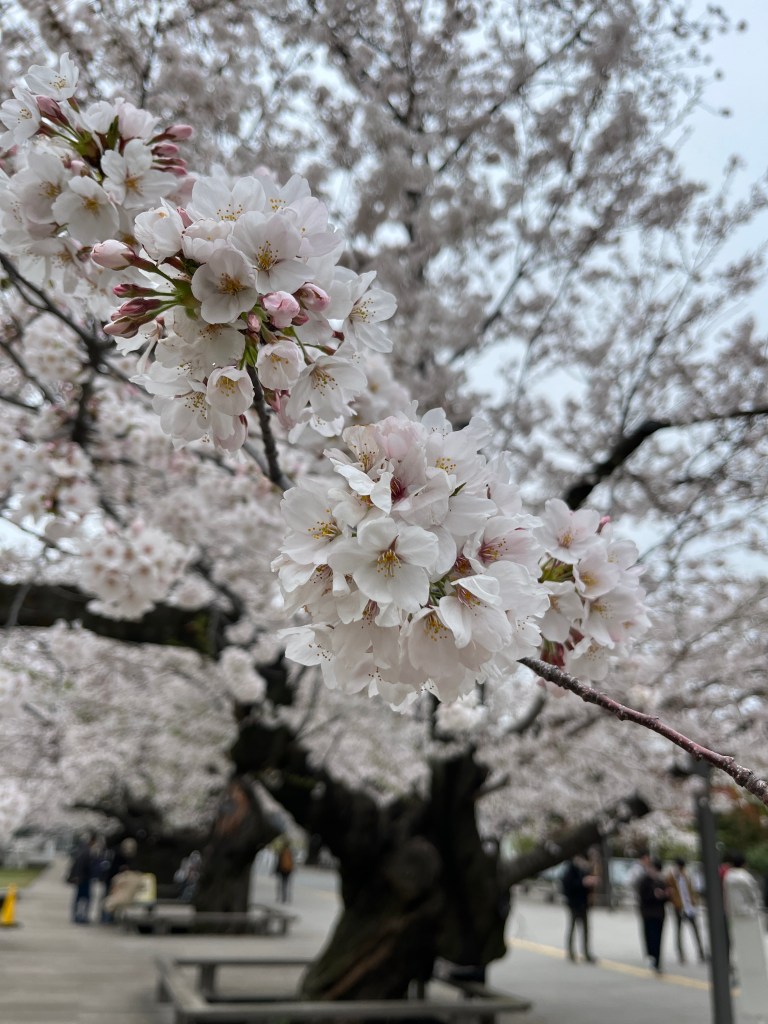
    cherry blossoms
    Spring. Photographed by TJ

    Now, when I am asked what my favorite season is, I have my answer ready and know exactly the reason why.

    Thanks for reading.

    TJ

  • How to Be Successful

    Recently, I watched a video by Ali Abdaal on YouTube titled, “How To Get Rich“. It was a great video because Ali didn’t just share the cookie cutter nonsense everyone else seems to spout these days. Instead, he shared the uncomfortable truth that no one wants to acknowledge. To get rich, you must get unhealthily obsessed with making money. Now, this article is not about how to make money or how to get rich, but I think Ali’s advice is very important and can be applied to any areas in life that you want to become successful in.

    When I was in middle school, I remember constantly getting bored during math class. I felt like I was wasting hours of my life repeating the same material I already knew how to do. Because I couldn’t just leave the class, I found a way to make my minutes more productive. I asked the teacher if I could work on the next day’s material. This was the catalyst for what would change my life completely. As I began to work ahead on mathematics assignments, I realized that I could finish the entire year’s worth of material much sooner than prescribed. I became obsessed with completing more and more assignments to see how far ahead I could get. Eventually, I finished all the material required for my grade level with three months left in the school year. My teacher then suggested I start working on the material for next year. Still obsessed, I jumped on the opportunity and soon found that I had completed all the requirements for ninth-grade mathematics by the time the school year was coming to a close.

    The principal of the school took notice of my accelerated plan and reviewed my records in other classes. With his approval, I was cleared to skip the requirements for all other grade-nine subjects, and come Fall, I would start taking classes with students one year ahead of me.

    I worked steadily at this level for one semester before another opportunity crossed my path. I was offered the chance to begin a dual-enrollment program the following year — if I transferred to a different high school. Still intoxicated by the idea of graduating early, starting college at the age of 15 was an incredible proposition. I accepted the offer, transferred schools, and started taking university classes a semester later.

    I graduated university having just turned 17, and with two years-worth of university credits and experience under my belt. None of it would have been possible if I wasn’t so obsessed with pushing myself further academically. I sacrificed extracurriculars, social groups, and other activities to reach my goal. Looking back, I think this is the kind of “unhealthy obsession” that Ali was talking about.

    Since watching that video, I have started looking at the paths of other successful people. I can think of many athletes that have dedicated their lives to their sport, often making large sacrifices to become the best that they can be. Talented musicians who spend hours practicing. Academics that rarely see sunlight because they are so passionate about increasing their knowledge. Mechanics who spend their free time fiddling with any machinery they can find. Artists who doodle on everything. The list is endless.

    I think Ali was on to something. Successful people are (or were at some point) unhealthily obsessed with whatever it is they became successful at.

    To be successful, you have to immerse yourself in the world of whatever it is you are trying to achieve. Consume content related to it whenever you can then apply it in strategic ways. Learn and improve constantly. Desire to achieve.

    And if you can’t become obsessed with it, how much do you really want it?

    What are your thoughts on this? Do you agree or disagree with obsession as a way to get successful? Let me know what you think in the comments section and be sure to give this article a “like” if you enjoyed it.

    Thanks for reading.

    TJ

  • How to Stay Consistent with Exercise

    In a previous post, I wrote about my running journey. I love running, but I haven’t always been able to do it. I have had many injuries and other commitments that left me unable to either endure the physicality of running or find the time to run. Usually, when that happens, both my mental and physical health suffers tremendously. Other times, my emotions get in the way; I talk myself out of doing an exercise because of some excuse I came up with. I’m too tired, I’m stressed about deadlines, I don’t want to lose momentum on the project I’m working on, etc. When I fall into this mindset, my workout routine becomes non-existent, or sporadic at best. After years of letting this mentality get in the way, I have finally figured out how to stay fit despite feeling every emotion in the book.

    This post has one purpose: to help you stay consistent with your exercise routine. It is not meant to be a training plan, a “lose weight fast” scheme, or a tutorial on how to build muscle. My goal is simply to help you move your body every day, despite what you may be feeling that day. Here’s how to do it:

    1. Note which activities you enjoy doing. What activities do you instinctively do? Are there other activities you want to try?
    2. Determine timeframes. How long do you spend on each activity? How much time do you have each day to spend on activities?
    3. Pay attention to your emotions. How do you feel when you do a particular activity? How did you feel before you started doing that activity? How do you feel after?
    4. Put it together. Which activity do you do when you feel happy or excited? Which activity do you do when you feel sad, or mad, or nervous? Which activity do you do when you are short on time? Which activity do you do when you want to turn your brain off for a while?
    5. Make the commitment to move every day. Adjust the activity based on your habits and emotions.

    When I first started to track myself, my answers to these steps looked like the following:

    1. I instinctively go running or do yoga at home. I want to try cycling, swimming, and boxing.
    2. Running takes me 30 minutes minimum, but I usually drive to a location to run which adds 10-15 minutes each way. Yoga takes less time, usually only 15-20 minutes. I only have 20 minutes to spend on exercise during the week. On weekends, I have more time.
    3. When I run, I feel free but also impatient to finish. I always feel accomplished and happy afterward. When I do yoga, I feel calm and relaxed. I leave every session feeling more mindful and tolerant. Before running, I am either feeling nervous or stressed about something, or I feel very energized and up for more intense activity. Before doing yoga, I am usually tired or my mind is racing and I need it to calm down.
    4. See my activity-emotion-time chart below for how I put it all together.
    5. I now know which activities to do when I am stressed or happy, which to do when I am tired, and which to do when I am angry. From that list, I pick which activity fits in the time frame I have available that day, or I may modify the length of the activity to match.

    Activity-Emotion-Time Chart

    ActivityEmotionTime
    RunningBefore: nervous, stressed
    During: free
    After: accomplished, happy
    30 min – 1 hr 30 min
    CyclingBefore: lazy
    During: content, inspired
    After: accomplished, happy
    15 min – 2 hr
    SwimmingBefore: tired, sad
    During: adventurous, playful
    After: awake, rejuvenated
    1 hr
    YogaBefore: sleepy, anxious, unmotivated
    During: calm, relaxed
    After: mindful, tolerant
    15 -20 min
    BoxingBefore: angry, motivated
    During: strong, bad-a**
    After: epic, free, capable
    20 – 40 min

    Reading through the after-effects of the activities I wrote down reinforces how beneficial exercise is to my mental state. I find that each activity gives me a boost in some area of my mood or mentality. When I spend my week trying a few activities, I feel more playful and find that I look forward to exercise. An unexpected bonus is that it prevents me from paying attention to statistics or PRs because I can’t remember the stats for five different exercises at one time!

    I now work out according to what I need that day and no longer force myself to do any particular activity because I feel I should. I do the activity now because I want to, knowing that it will help my mental state. Working out is not a punishment for me, it is a tool to help my emotions. Gentler exercises suit me best when I am unmotivated or tired, while the more intense and demanding exercises satisfy my needs when I am full of energy. Since I have been following this method, I have not missed a single day of exercise in the past two months. I feel happier, healthier, more capable, more resilient, and I am in the best shape of my life!

    What activities do you do to stay fit? Do you like my method of working out to your emotional needs? Let me know if you try it!

    Please like this post if you enjoy this type of content, and subscribe so you don’t miss any future posts.

    Thanks for reading. Happy exercising!

    -TJ

  • Learning to Love Car Rides

    As a child, I spent a lot of time in the car, in buses, and on trains, traveling back and forth between my parents’ houses. The traveling time for these trips was anywhere from one hour to ten hours one-way. To a kid, you can imagine how that would sound dreadful — and keep in mind that this was also in the days before smartphones and iPads. Flash forward to today and I love car rides!

    I probably love car rides because I am so used to them – at this stage, spending long hours in a vehicle is as normal as eating food – but I think it goes deeper than that. I have great memories from the time spent traveling as a kid.

    My dad was the parent that did most of the legwork for collecting and driving us kids. At the time, he was leasing a blue Pontiac Vibe, and I remember thinking it was the coolest car in the world and that I wanted one just like it when I grew up. I also remember giving it a name, but for the life of me, I cannot remember what it was. Anyway, it had five seats – two in the front, three in the back. Now, with there being three of us kids, one would have had to squeeze into the uncomfortable middle seat – something that would have created MANY fights. Instead, my dad enlisted one of us to be his copilot in the front – the caveat being we had to use the paper map to help him navigate. Of course, what young person would not jump at the opportunity to sit in the front seat! My brothers and I developed a rotation system to keep it equal and away we went.

    As we traveled more and more, my brothers became bored of the navigation duties, opting instead to play their Nintendo DS’s together in the backseat. Lucky for me – I loved the front seat. I was always a Daddy’s Girl and relished the chance to have him all to myself for hours. I also loved adventure and would pretend we were pirates exploring uncharted waters – using the paper map only added to my imagination.

    We would drive for hours, only stopping for the restroom when the car needed fuel. We drove through mountain passes and my dad taught us how to corner. We drove late into the night and my dad taught us how to scan for deer. Sometimes, we were even lucky enough to see the Northern Lights.

    At other times, neither parent could commit the time to drive both ways just to fetch us, so we had to take the Greyhound. Since there were three kids, we were instructed to always stay together and look out for each other. My brothers – being two years older than me – assumed the supervisory role but ultimately left me alone in favor of playing their own games. I was used to their exclusion and relished the chance to read more books, uninterrupted by chores or schoolwork.

    Riding the bus made me feel independent and capable. Strangers on the bus would often comment on how responsible we were, and I lapped it up.

    Eventually, my dad moved farther away and neither driving nor taking the bus was an option. So, riding the Amtrack it was. It was more comfortable than both the car and the bus, and I could get up and walk around as much as I wanted to. I also remember being so excited because none of the other kids in my class had ever ridden a train before.

    Regardless of the way I traveled, I always looked forward to it. I got to be an explorer and do my own thing. I could sleep all day if I wanted to without anyone telling me I should be more productive. On those trips, surrounded by strangers, I could be anyone I wanted to be. Sometimes, I was the mysterious traveler like the characters in my books, or I was the brooding, emotional actress staring out the window like in the movies. I could be the main character whenever I traveled.

    Now that I am grown up, I live on the opposite side of the country from my family but travel once, sometimes twice a year to see them. Before I had my driver’s license and my own car, I flew by airplane, draining what little savings I had. Then, once I had bought my own car, I drove myself cross-country to see them. Ninety-nine percent of the time, it was a solo trip both ways.

    Expense aside, I like driving myself. I feel productive because I am going somewhere, and I feel relaxed because I get a break from work or school responsibilities. Deep down though, I think I enjoy driving because it reminds me of those simpler times when I was a kid, chatting away to my dad in that little Pontiac Vibe.

    What is something you do now that reminds you of your childhood? Did you enjoy it then? Do you enjoy it now? How do you feel about long car rides?

    Feel free to share your answers in the comment section. Let’s get a discussion going!

    Thanks for reading.

    -TJ

  • Establishing Goals

    The general advice given to people who are starting something new is to set goals for yourself. These goals should be achievable and allow you to grow. Since I am new to blogging and creating my own website, I want to take the time to lay out my goals.

    First on my list was to actually create a website to host my blogs. Check.

    Second, write the first post. Check.

    Now what?

    Unless someone actually reads this post, I will feel like a crazy person for writing conversationally to myself. So, Goal 3, engage an audience. First, I want people to actually visit my site, then I can start establishing a loyal community.

    I have seen so many videos and articles talking about setting up Search Engine Optimization (SEO). I will look into setting this up once the content of my website is more flushed out.

    I can also advertise on social media but, again, I am waiting to have more established content. I’m also not too keen on social media anymore because I feel there is too much pressure surrounding it. This blog is meant to be my own safe haven from popular culture.

    Goal 4: develop content to include on website. Technically, this should be higher on the goal list, but I am free-writing this post and this is the order in which it has entered my mind. Welcome to my brain.

    I want this website to encompass my variety of interests and hopefully build a community of like-minded people. For me, this means sharing my creative writing, sharing my podcast “Fall Asleep to Science“, posting my favorite cooking/baking recipes, developing my own monthly science newspaper for subscribers that hopefully join my community in the future, getting back into arts and crafts and sharing my creations, etc.

    I feel like I should create a fifth goal, but I honestly cannot think of one at the moment. Really and truly, I just want to share my creative brain with people in a pressure-free way. Having this website as the containment hub for all my activities seems like a great way to do that.

    That’s all I want to say for now.

    Be sure to check out my podcast “Fall Asleep to Science” if you haven’t already. It is available on Spotify, Apple Music, and Amazon Music. Also, feel free to leave a comment if you enjoyed it or have any suggestions for future posts.

    Feel free to share your own goals for something new you are trying. Let’s get this community going!

    Thanks for reading!

    -TJ