I’m fairly certain everyone is familiar with the old saying, “the rich get richer…” — especially since it has resurfaced to throw sour grapes at modern billionaires — but what about the fit get fitter?
The Case for Professional Athletes
This idea was initially inspired by the professional triathletes I have been following through the T100 series this year. Two athletes in particular are RedBull sponsored athletes — Lucy Charles-Barclay and Hayden Wilde. Wilde gained widespread popularity recently as he was in a major accident and came back earlier than expected to win the T100 London race, shortly followed by a back-to-back race at T100 French Riviera. Charles-Barclay won the female division of T100 London, coming back from last-year’s DNF due to injury.
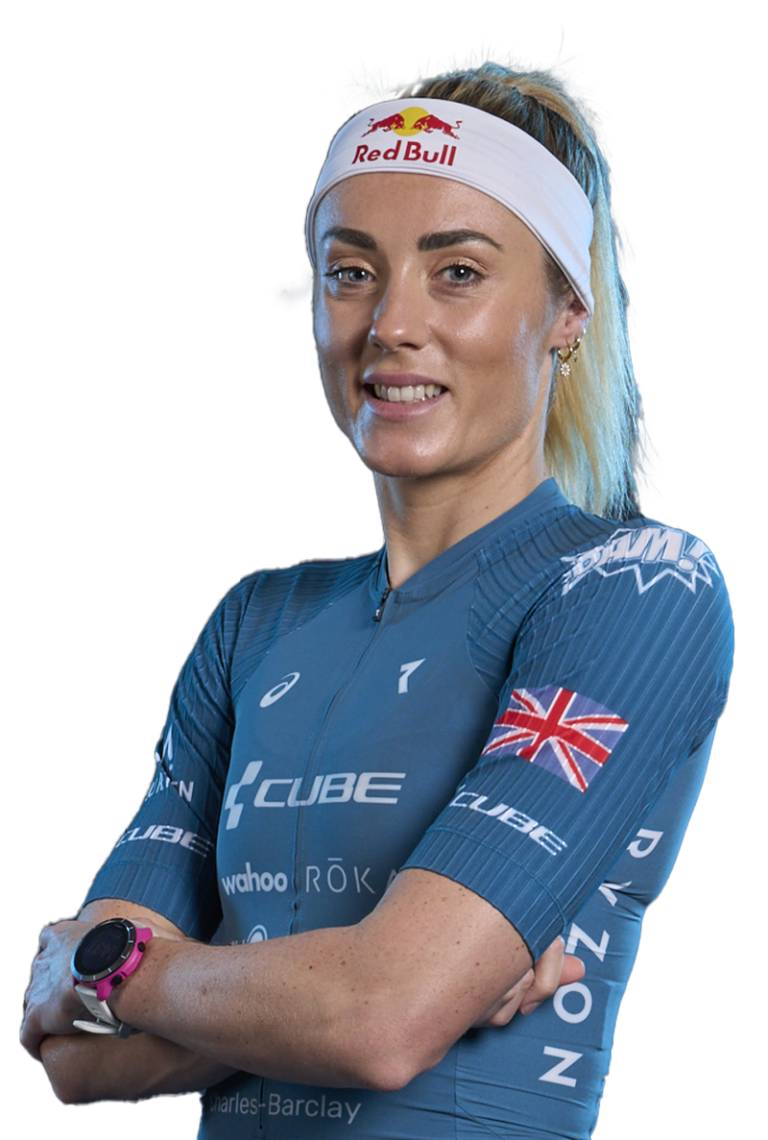
If you follow their activities through their regular videos on YouTube, you will see immaculate home-gym set ups and top-of-the-line equipment for both training and competitions. I can’t help but wonder how much money goes into all that gear. Luckily for them, they are sponsored by one of the most prolific athletic sponsors in the world. Not a factor of luck, though, is the hours of work they have put into becoming the best in the sport so as to earn such a prestigious sponsorship.
So that begs the question… Do the fit get fitter?

All athletes train hard — especially the professionals — and in a sport like middle- to long-distance triathlon, the results are largely dependent on the fitness of the athlete. However, triathlon is dependent on the gear that you have. Turn on any triathlon podcast and you will hear a ton of talk about the best bike set-ups, fastest tires, most aerodynamic position, etc. Not to mention the discussion on fastest running shoes or most hydrodynamic wetsuit. My point is, the highest-performing athletes gain the most attention and therefore partner with the best brands to gain advantages in kit upgrades and training center access. Not to mention the paychecks that allow them to leave their day jobs and pursue training full time. Might this improve their fitness faster than the average athlete?
When I think of this question, I think of a graph with an exponential curve of growth. In the beginning (near 0 on the x-axis), the growth is small and virtually unrecognizable until finally it reaches a turning point and the growth takes off. In athletics, one could liken that turning point to a breakthrough in their career such as a career-defining win, or the moment they decided to pursue their sport professionally. On a mathematical graph, the growth could continue to infinitum, but is that also the case for athletes?
Of course, there are always new athletes entering the conversation. Charles-Barclay herself was a stand-out newcomer when she first made the transition from competitive swimmer to triathlete. But how many standouts are true beginners, having never competed in another sport before?
It seems fairly intuitive that physical fitness can translate between sports and that sport-specific technique is what needs to be honed for any athlete to do well. With this in mind, the top athletes would need to have large amounts of innate talent to be as good as they are. One can always hire a coach to help them develop better and faster than they might on their own, but as evidenced by the most recent Ironman World Championships, uncoached athletes can also train themselves to top-place finishes.
So what does this say about fitness? Is there a pinnacle level of fitness that everyone is capable of reaching that no amount of fancy training gear can help them surpass? Or does access to top-of-the-line equipment give athletes an edge, making the fit… fitter?
The Case for the Average Person
While it’s great to ponder this question for people at the peak of their biological fitness levels, how does it apply to the everyday human? The majority of people on the planet are not athletes training every day to make podiums or break records, they are merely completing their daily responsibilities or striving to maintain healthy levels of activity and nutrition. Does the concept of “the fit get fitter” apply to them?
Looking at it from a bioenergetics perspective, people with less muscle mass and higher body fat percentages are at a disadvantage. Reading any study or textbook related to exercise science will make it apparent that muscle burns more calories than fat. In other words, the more muscle mass a person has, the more likely it is for them to have a higher basal metabolic rate.
The basal metabolic rate is defined as the number of calories a body will burn over a 24 hour period if laying down but not sleeping. A higher basal metabolic rate is preferred as it means more calories can be utilized for functional purposes, rather than merely excreted or stored as fat.
In the past two to three decades, diet culture was massively influential. It drove many people — women especially — to under eat in the hope of losing weight. Initially, cutting calories worked for people, they would slim down to their goal weight, then bounce back to their initial weight or worse within a few months of ending their diet. I’m sure many people will either have experienced this for themselves or know someone who fell victim to the yo-yo of dieting.
Educated trainers would know that restricting calorie intake can actually do more harm than good. Unfortunately, financial gain was louder than healthful practices.
Now, at least, there seems to be an uptick in people engaging in strength training. This is a massive step in the right direction as resistance training is a highly effective way to lose weight and keep it off in a healthy way.
To most people, this may seem counter-intuitive. If you are thinking about body weight, most people will know that muscle weighs more than fat; if you gain muscle, your total body weight will increase. What they might not understand though, is the biochemistry happening inside the body.
Fat serves as energy storage in the human body. It’s purpose is to help the body function properly during times of low calorie intake, preventing your body from shutting down immediately if no food is consumed. Most studies say humans can survive up to three days without food — this is largely due to the energy reserves stored in fat.
Muscle, on the other hand, can be built or lost with action or inaction, respectively. Use it or lose it, in other words. Muscle requires a lot of energy to maintain as it requires the body to breakdown and utilize proteins. If there is no need for the body to maintain a muscle due to lack of use, it sends its efforts elsewhere to provide attention to other areas of the body that are being used.
Think of people who broke their leg or ankle and had to wear a cast for several weeks. By the time they have the cast removed, the leg that was injured is visibly smaller than their other leg. The muscles were not utilized, so the body diverted energy away from maintaining those muscles.
If a person starts to use certain parts of their body more (i.e. lifting weights), the body will adapt and divert energy to the required limbs to help accomplish those tasks. Muscle will start to build, but it can only do so if the proper macronutrients are available.
The body will start to adapt by utilizing the fuel given to it to develop those muscles. As more strength is gained, muscle mass increases, and more calories are burned. Even maintenance of the muscles requires the body to expend energy, thus utilizing fat and carbohydrate stores to achieve required energy needs.
All of this culminates in healthier, stronger people with lower body fat percentages. Exercising and healthy eating becomes essential to maintain or improve fitness levels. People can get into the rhythm of daily exercise, they see strength and size improvements, they feel better. It becomes addicting after a while as those endorphins (the feel good hormones) are released in the brain during exercise. The fit continue to exercise, only serving to increase their fitness…
Conclusion
As with anything, it is what you make it. It is not innate for a trend to continue just because it has started, one must still fuel it. The RedBull sponsored athletes still have to train hard to perform well, non-athletes still have to eat well and exercise to maintain their fitness, wealthy people have to continue to make money to stay wealthy… the list goes on.
So, do the fit get fitter?
While it is tough to answer for sure, one thing is for certain: it is easier to stay fit when you are already fit.
Let’s keep the discussion going in the comments. What do you think about fitness? Is it a level to be achieved or can a person keep getting fitter?
Thank you for reading!

 LambCHNOPS