Tag: writing

  • Adding “Seasoning” to Your Life

    As someone from the upper region of the northern hemisphere, I was no stranger to all four seasons. I switched sports depending on what time of year it was; ice skating in the winter, basketball in the spring, softball in the summer, cross country in the fall. I watched farmers sow crops in spring and harvest in the fall. I knew what it meant when the geese formed triangles in the sky. The seasons were alive and well all around me, but I rarely paid attention to them. Like every child, I was asked which season was my favorite, just as surely as every child is asked what they want to be when they grow up. Sure, I had a favorite season and another that I was less fond of, but I never really thought about why that was.

    After finishing high school, I moved south in search of an endless summer. Year-round average temperatures of 80 F/27 C was an absolute dream in my eyes. Over time, though, the sheen wore off and I started to feel more and more exhausted with each passing day, but I couldn’t understand why.

    I then relocated to a city with all four seasons. Though the city was large and very busy, I felt a strong urge to slow down and rest. First, the changing colors of Autumn invited me to get cozy, then the biting cold of Winter yelled at me to bundle up and settle in. As insistent as those seasons were, I regret to say that I did not listen.

    The modern world trudges along at an unyielding pace, the march to which I conform. Slow down? Never. Push through? Absolutely.

    After what seemed like forever, Spring finally came skipping down the street. In a sing-song voice, Spring told me that it was time to shed the layer, get rejuvenated. But by then, I was too fatigued to be excited about Summer’s arrival.

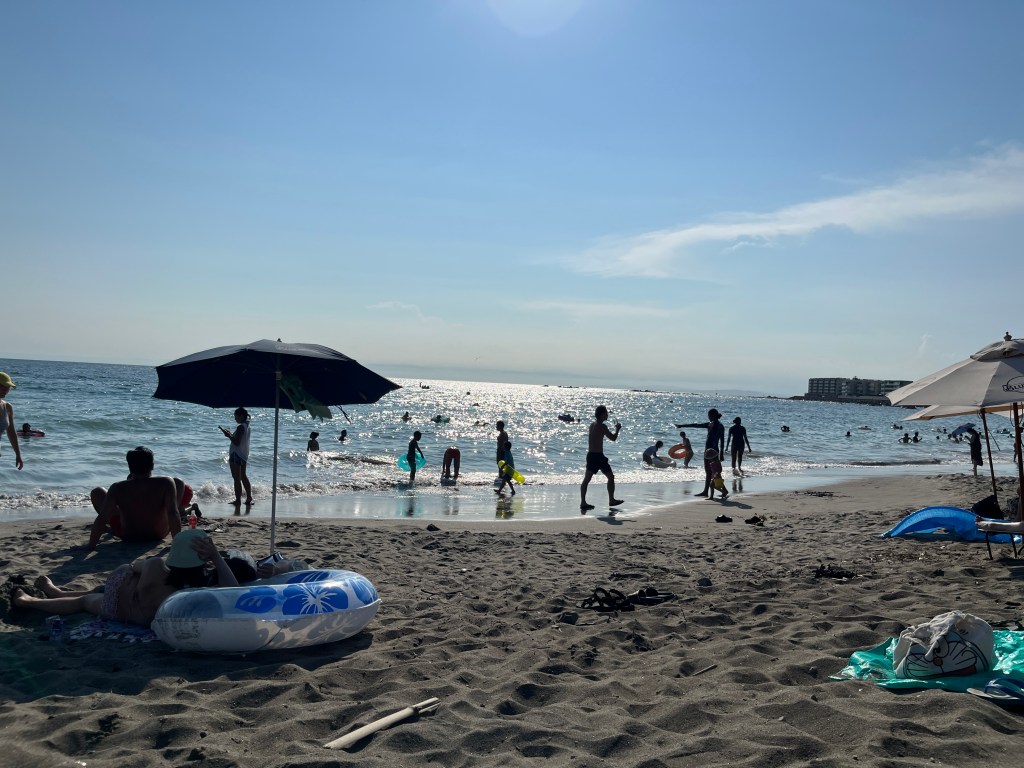
    Autumn. Photographed by TJ

    I learned that in bustling cities, people do not slow down when the weather begins to cool. The chills of autumn winds and the snowy gusts of winter are mere conversations to modern folk. The sight of flowers beginning to peek out of their bulbs and the return of the sun are just pleasant tidings, but neither changes the daily grind. Without acknowledging the messaging the seasons are trying to give, living in these types of climates can be just as exhausting as a perpetual summer.

    Burnout, exhaustion, and a lack of motivation may be a sign that we have fallen out of sync with our surroundings. Maybe listening to the signals of the seasons could be a way to regain balance in our lives? Maybe taking heed of the seasons would allow time for rest, time to plan, time to grow, and time to flourish?

    A city street with people walking in the snow.
    Winter. Photographed by TJ

    Thinking about seasons in this way reminds me of Vivaldi’s Four Seasons. In each concerti, the personality of the respective season is expressed through patterns in the notes. Naturally, Winter sounds more melancholy than Summer, but that does not mean it is not without its own climactic moment. Moments of excitement and moments of calm are what make the songs dynamic, and these elements are present in the naturally occurring seasons as well.

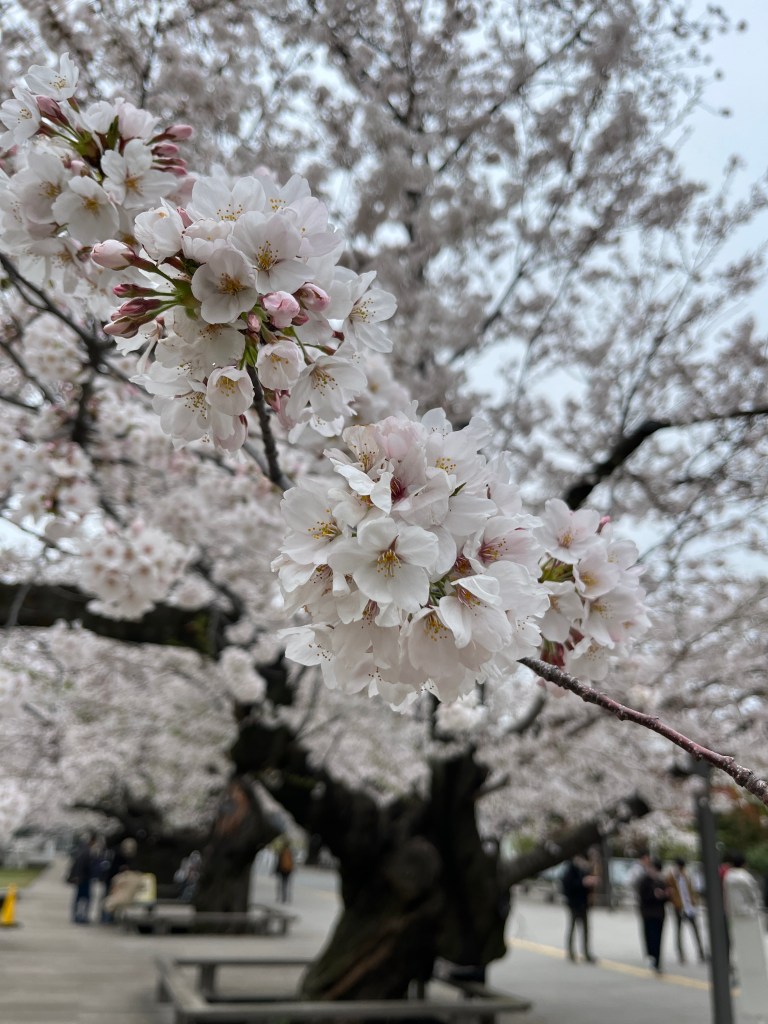
    cherry blossoms
    Spring. Photographed by TJ

    Now, when I am asked what my favorite season is, I have my answer ready and know exactly the reason why.

    Thanks for reading.

    TJ

  • Graduate School: A Cautionary Tale from a Two-Time Dropout

    I tried graduate school twice but dropped out after one year both times. It wasn’t that I couldn’t handle the academics (I had completed all the required coursework in my first degree and was halfway through the requirements of the second), I couldn’t handle the competitiveness of academia.

    For years, I had tied my self-worth to my academic success. I studied hard, got good grades, skipped a grade, made dean’s lists and honor rolls, and graduated early. By all accounts, I was successful. Except, graduate school is not about coursework or grades, it’s about research.

    I was always so eager to learn that I soaked up any information I was given or could find for nearly all the topics covered in high school and during my bachelor’s. I thought graduate school would be more of the same. What I didn’t realize was that graduate school prepares you to be an expert on one topic: the topic you research. In graduate school, you spend years planning experiments, writing procedures, testing hypotheses, reviewing literature, and presenting your findings for the niche topic you chose when you started. That works for a lot of people, but it does not work for me.

    I am a very self-motivated person. I work well independently and can focus on tasks for significant periods of time. I put my all into every project I do. This seems like it would be the perfect profile for a graduate school candidate, but actually, it is the perfect recipe for burnout.

    In graduate school, there are no set working hours. You decide your schedule. You still answer to your supervisor and have deadlines to meet, except those deadlines are often months to years in the future. You have to budget your time well enough to meet those deadlines. Simple in theory, difficult in practice.

    When you are in graduate school, there is a shiny star called “the future” to guide you through the massive amount of work you must complete. You are enticed by the promise of a high paycheck and notoriety if you make a significant contribution to your field. You work diligently, day and night, to perform the necessary experiments, gain credible data, and write informative prose, only to find out that a mere five people will ever read your dissertation. There are also academic journals that all researchers, students and professionals alike, are encouraged to publish in. “Publish or perish” is a common mantra I heard in graduate school. Publications get you professorships, and isn’t that the goal for academics?

    Then there is the issue of egos. Everyone in academia — professors, post-docs, and students — all think they are smart. They would not be in their position if they weren’t. The trap students fall into is in trying to prove their intelligence. No longer is it enough to think you are smart; everyone else must think you are smart too. When you are in a place where everyone around you is intelligent, there is no easy measure for assigning smarts, but students find their own ways to determine it. “I come in earlier than everyone else.” “I stay later than everyone else.” “I’m farther along in my research than everyone else.” “I’m attending these conferences.” “I have X amount of publications.” If any one of these criteria are not met, students feel like they are failing. Thus starts the cycle of putting in more hours and more effort to achieve the high standard students are only putting on themselves.

    To cap it all off, each stage in the academic ladder is expensive, thankless, and rarely pays well. To be in academia, you must love it. You have to love the mundane task of carrying out experiments that, by design, are unsuccessful more times than they succeed. You have to love having every word of everything you say or write be scrutinized. You have to love being in competition with your peers — imaginary or not. Academia is brutal and graduate school is just the tip of the iceberg.

    Most of the professors I have met, don’t seem to care about this cycle. The impression I got was, “I got through it, so must you.” They are only too happy to see the experimental results come in and the journal papers be written. It secures them publications for their H-index and a cozy position at the university.

    University professors do wear many hats and are often incredibly busy. With teaching classes, advising undergraduate students, supervising graduate students, serving on committees, peer-reviewing journals, applying for grants, and conducting their own research, professors are stretched extremely thin. It is all too easy to blame them for failing to help their graduate students emotionally, but they are also running their own hamster wheel.

    There are wonderful professors out there who put in the effort to nurture their students to be successful in academia, but they are few and far between. It also isn’t entirely the supervisor’s fault when a student leaves. I had a wonderful supervisor during my first attempt at graduate school that put in great effort towards helping my lab mate and I succeed in our research. I blame my immaturity for my withdrawal. I was swept up by the imagined competition, the need to prove myself, and the daunting prospect of spending four more years on only one topic I wasn’t sure I liked.

    My second attempt was the real eye-opener. After taking a year off from academia, I switched schools, departments, supervisors, and countries for my next attempt. I will say that many things took place in my personal life that led to my ultimate withdrawal from this university, but there is also a lot to be said about the program and research environment I was in that made me decide to leave.

    This university was much more prestigious than the first university I attended and their research was much more visible. I was excited to learn from the best of the best and hopefully become one myself. In the beginning, I took in as much advice and information as I could. I paid attention to the senior students and tried to mimic what appeared to be working for them. When I transitioned into the phase of finally conducting my own experiments and presenting my own work, things started to fall apart.

    My supervisor became more distant and was extremely harsh when he did give feedback, often in the form of public shaming. I had difficulties with trying to repair broken laboratory equipment and navigating the process of ordering materials (in a foreign language) for my research. I felt like I was falling behind, so I put in more hours at the institute, arriving extremely early in the morning to get work done while the building was quiet and empty. I agonized over the presentations and reports I prepared, only to have them ripped apart or entirely rewritten by my supervisor. No matter how much effort I put in to improve, I was just left feeling stupid, incapable, and like “a waste of time.” Compound that with the issues I was facing in my personal life, and I spiraled into a very dark place mentally. When I realized just how bad things had become and nothing was working to pull me out of the state I was in, I knew I had to leave. I felt tremendous shame for walking out in the middle of another graduate degree, but it had to be done.

    Now, months later, I am the happiest I have felt in a long time. After having initially sworn off anything related to science, I have found great enjoyment in producing my podcast, Fall Asleep to Science, and applying my prior coding and analysis experience to become a data scientist.

    I am thankful for my graduate school experiences because they helped me to understand my true passions and what I want out of my professional career. I am now aware of my natural tendencies and insecurities and am working to correct those that hinder me. I learned so many valuable skills that I will carry with me into future roles: time management, effective research strategies and experimental design, work-life balance, and networking. I am a more capable person that will continue to improve with each new experience. I fell on my face twice by quitting two graduate programs, but I am a much more self-aware person because of it.

    If you are considering graduate school, I strongly encourage you to think about your mental patterns and what motivates you. If your habits and motivations are similar to what mine were, I urge you to set up a series of checks for yourself to prevent burning out. A desire for prestige is not enough to carry a person through the highs and lows of academia. Be sure to choose a supervisor you trust and a topic you could spend years dissecting. Prepare yourself before you start by brushing up on the topics you will be expected to know for your chosen discipline.

    Academia is a great space, but it is undeniably challenging. Choose wisely and prepare accordingly.

    What were your biggest failures that led to your most fruitful growths? Did you go to graduate school? What are your mental habits?

    Feel free to share your answers in the comment section, or like this post if you enjoyed it.

    Thank you for reading.

    -TJ

  • Learning to Love Car Rides

    As a child, I spent a lot of time in the car, in buses, and on trains, traveling back and forth between my parents’ houses. The traveling time for these trips was anywhere from one hour to ten hours one-way. To a kid, you can imagine how that would sound dreadful — and keep in mind that this was also in the days before smartphones and iPads. Flash forward to today and I love car rides!

    I probably love car rides because I am so used to them – at this stage, spending long hours in a vehicle is as normal as eating food – but I think it goes deeper than that. I have great memories from the time spent traveling as a kid.

    My dad was the parent that did most of the legwork for collecting and driving us kids. At the time, he was leasing a blue Pontiac Vibe, and I remember thinking it was the coolest car in the world and that I wanted one just like it when I grew up. I also remember giving it a name, but for the life of me, I cannot remember what it was. Anyway, it had five seats – two in the front, three in the back. Now, with there being three of us kids, one would have had to squeeze into the uncomfortable middle seat – something that would have created MANY fights. Instead, my dad enlisted one of us to be his copilot in the front – the caveat being we had to use the paper map to help him navigate. Of course, what young person would not jump at the opportunity to sit in the front seat! My brothers and I developed a rotation system to keep it equal and away we went.

    As we traveled more and more, my brothers became bored of the navigation duties, opting instead to play their Nintendo DS’s together in the backseat. Lucky for me – I loved the front seat. I was always a Daddy’s Girl and relished the chance to have him all to myself for hours. I also loved adventure and would pretend we were pirates exploring uncharted waters – using the paper map only added to my imagination.

    We would drive for hours, only stopping for the restroom when the car needed fuel. We drove through mountain passes and my dad taught us how to corner. We drove late into the night and my dad taught us how to scan for deer. Sometimes, we were even lucky enough to see the Northern Lights.

    At other times, neither parent could commit the time to drive both ways just to fetch us, so we had to take the Greyhound. Since there were three kids, we were instructed to always stay together and look out for each other. My brothers – being two years older than me – assumed the supervisory role but ultimately left me alone in favor of playing their own games. I was used to their exclusion and relished the chance to read more books, uninterrupted by chores or schoolwork.

    Riding the bus made me feel independent and capable. Strangers on the bus would often comment on how responsible we were, and I lapped it up.

    Eventually, my dad moved farther away and neither driving nor taking the bus was an option. So, riding the Amtrack it was. It was more comfortable than both the car and the bus, and I could get up and walk around as much as I wanted to. I also remember being so excited because none of the other kids in my class had ever ridden a train before.

    Regardless of the way I traveled, I always looked forward to it. I got to be an explorer and do my own thing. I could sleep all day if I wanted to without anyone telling me I should be more productive. On those trips, surrounded by strangers, I could be anyone I wanted to be. Sometimes, I was the mysterious traveler like the characters in my books, or I was the brooding, emotional actress staring out the window like in the movies. I could be the main character whenever I traveled.

    Now that I am grown up, I live on the opposite side of the country from my family but travel once, sometimes twice a year to see them. Before I had my driver’s license and my own car, I flew by airplane, draining what little savings I had. Then, once I had bought my own car, I drove myself cross-country to see them. Ninety-nine percent of the time, it was a solo trip both ways.

    Expense aside, I like driving myself. I feel productive because I am going somewhere, and I feel relaxed because I get a break from work or school responsibilities. Deep down though, I think I enjoy driving because it reminds me of those simpler times when I was a kid, chatting away to my dad in that little Pontiac Vibe.

    What is something you do now that reminds you of your childhood? Did you enjoy it then? Do you enjoy it now? How do you feel about long car rides?

    Feel free to share your answers in the comment section. Let’s get a discussion going!

    Thanks for reading.

    -TJ

  • Establishing Goals

    The general advice given to people who are starting something new is to set goals for yourself. These goals should be achievable and allow you to grow. Since I am new to blogging and creating my own website, I want to take the time to lay out my goals.

    First on my list was to actually create a website to host my blogs. Check.

    Second, write the first post. Check.

    Now what?

    Unless someone actually reads this post, I will feel like a crazy person for writing conversationally to myself. So, Goal 3, engage an audience. First, I want people to actually visit my site, then I can start establishing a loyal community.

    I have seen so many videos and articles talking about setting up Search Engine Optimization (SEO). I will look into setting this up once the content of my website is more flushed out.

    I can also advertise on social media but, again, I am waiting to have more established content. I’m also not too keen on social media anymore because I feel there is too much pressure surrounding it. This blog is meant to be my own safe haven from popular culture.

    Goal 4: develop content to include on website. Technically, this should be higher on the goal list, but I am free-writing this post and this is the order in which it has entered my mind. Welcome to my brain.

    I want this website to encompass my variety of interests and hopefully build a community of like-minded people. For me, this means sharing my creative writing, sharing my podcast “Fall Asleep to Science“, posting my favorite cooking/baking recipes, developing my own monthly science newspaper for subscribers that hopefully join my community in the future, getting back into arts and crafts and sharing my creations, etc.

    I feel like I should create a fifth goal, but I honestly cannot think of one at the moment. Really and truly, I just want to share my creative brain with people in a pressure-free way. Having this website as the containment hub for all my activities seems like a great way to do that.

    That’s all I want to say for now.

    Be sure to check out my podcast “Fall Asleep to Science” if you haven’t already. It is available on Spotify, Apple Music, and Amazon Music. Also, feel free to leave a comment if you enjoyed it or have any suggestions for future posts.

    Feel free to share your own goals for something new you are trying. Let’s get this community going!

    Thanks for reading!

    -TJ